Why Does Water Pool Around a Cesspit or Soak Hole After Rain?

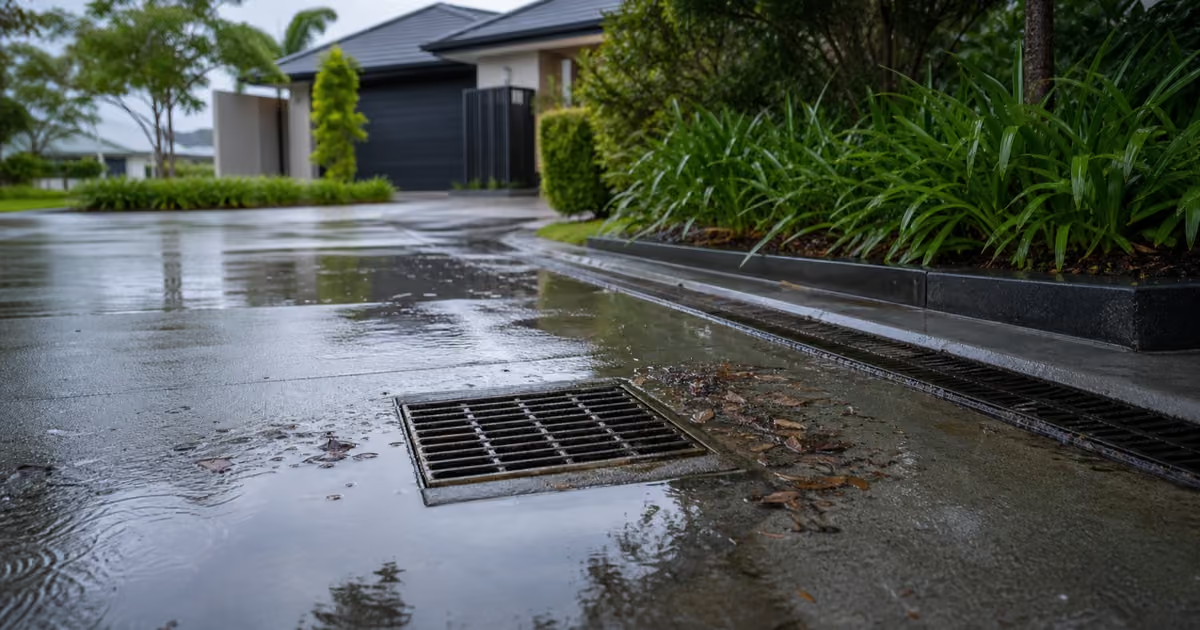
Short answer: water pools when stormwater reaches the area faster than the system can collect, convey or soak it into the ground. The cause may be surface debris, sediment inside a catchpit, a restricted connection, a blocked soak hole, unsuitable ground conditions or simply soil that is already saturated after sustained rain.
What do “cesspit” and “soak hole” mean in Auckland drainage?
In Auckland stormwater terminology, a cesspit is commonly a catchpit or stormwater sump. It collects runoff from surfaces such as driveways and carparks and traps leaves, grit and sediment before water enters the next part of the system.
A soak hole receives stormwater and allows it to disperse into suitable ground. Some are deep bores and others use a larger aggregate-filled space. The system depends on water reaching the soakage area and the surrounding ground accepting it at a useful rate.
The two components may work together, but they perform different jobs. Cleaning a catchpit does not automatically restore a restricted soak hole, and a functioning soak hole cannot compensate for a blocked inlet.
Is pooling after heavy rain always a blockage?
No. Short-lived ponding during an intense downpour can occur when rainfall temporarily exceeds the system's intake or soakage rate. Water should begin to recede as the rain eases and the ground drains.
Pooling deserves closer attention when it appears during ordinary rainfall, remains for an unusually long time, reaches buildings, repeatedly overflows from the same point or is becoming worse from one storm to the next.
Auckland conditions vary considerably. Council planning information notes that soakage is concentrated in some volcanic areas, while clay ground can be poorly suited to infiltration. That is why a diagnosis needs to consider both the drainage components and the local ground conditions.
What are the common causes?
Pooling usually comes from a restriction at the surface, sediment inside the system, a blocked connection, reduced soakage performance, saturated ground, additional runoff or physical damage. More than one factor can be present at the same time.
Leaves and debris covering the inlet
Leaves, bark, litter and garden material can form a mat over a grate. Water then bypasses the opening or collects around it even when the pipe below is open.
Sediment filling the catchpit
A catchpit is designed to retain grit and sediment. As material accumulates, the available storage space reduces and debris can reach the outlet. The chamber may look clear at the surface while the lower section is full.
A restricted outlet or connecting pipe
Silt, roots, displaced joints or other material can restrict the pipe between the catchpit and soakage device. In this situation, removing surface debris may make little difference because water cannot leave the chamber quickly enough.
A soak hole that has become clogged
Fine sediment can move through the system and restrict the surfaces where water enters the ground. The issue can build gradually, with ponding taking longer to disappear after each rain event.
Saturated or poorly draining ground
When the surrounding ground is already holding a large amount of water, infiltration slows. This can make an otherwise open system appear blocked. Prolonged rain, high groundwater and clay-rich ground can all influence performance.
More runoff reaching the system
New paving, roof connections, landscaping changes or redirected downpipes can increase the area draining to one point. A system that previously kept up may then receive more water than it was intended to manage.
Damage or movement
Cracked chambers, displaced pipe connections and ground movement can interrupt the intended flow path. Escaping water may also soften or erode surrounding material, so unexplained depressions or voids should be treated seriously.
What can a property owner check safely?
A property owner can safely observe the water, rainfall pattern and visible surface conditions without opening or entering the drainage system. These simple checks provide useful evidence for a later assessment.
- Observe whether the water is clear stormwater or contaminated wastewater
- Remove loose leaves and litter from the top of an accessible grate
- Note how long the pooling remains after the rain stops
- Check whether the problem occurs in light rain or only during major downpours
- Photograph the water level and surrounding area from a safe position
- Look for new ground settlement, cracking or water approaching the building
Do not enter a pit, remove heavy covers, reach into water, or use equipment in an unknown underground system. Open chambers can contain hazardous conditions and may be deeper than they appear.
How is recurring pooling assessed?
A useful assessment follows the water path rather than assuming the nearest grate is the problem. It may include:
- Checking the inlet and the amount of retained sediment
- Identifying where the catchpit outlet leads
- Inspecting accessible connecting pipes with a CCTV drain inspection
- Removing accumulated material where appropriate
- Confirming whether water can reach and leave the soakage area
- Looking for damage, unexpected connections or signs of ground movement
The result may point to routine cleaning, a restricted pipe, a soakage-performance issue or a system that needs further drainage or engineering investigation. Those are different findings and should not be treated as the same repair.
When does pooling need prompt attention?
Pooling needs prompt attention when it threatens a building, may involve wastewater, creates an electrical or access hazard, or appears alongside ground settlement or a damaged drainage cover.
- Water is entering a home, garage or commercial building
- The water may contain wastewater
- A hole, depression or soft area is forming in the ground
- A pit cover has moved or become unsafe
- Water is affecting electrical equipment or a vehicle accessway
- The system remains full well after rainfall has stopped
If a sinkhole or sudden ground collapse appears, keep people and vehicles away. Auckland Council advises that the visible opening may be smaller than the underground void.
How can future problems be reduced?
Keep surface inlets visible, prevent garden material and sediment from washing toward them, and inspect the system before the wettest periods of the year. The appropriate cleaning interval depends on nearby vegetation, traffic, exposed soil and how quickly the catchpit accumulates material.
A change in drainage performance is useful evidence. Recording when ponding began and how long it lasts gives a technician a clearer starting point than waiting until the area is completely flooded.
Frequently asked questions
Can a blocked soak hole always be cleaned?
No single answer applies. Some restrictions are caused by removable sediment, while others relate to the surrounding ground, the device's construction or the amount of runoff entering it. The cause needs to be identified first.
Why does the water disappear slowly but not overflow?
That often means the system still has some capacity but is accepting water more slowly than before. Sediment, a partial pipe restriction or saturated ground are possible explanations.
Is a stormwater cesspit the same as a septic tank?
No. In this context, the cesspit or catchpit is part of the stormwater system. It should not receive household wastewater.
Related information and sources
Hydro Vision's cesspit, channel drain and soak-hole information explains its assessment and cleaning process. For wider context, Auckland Council describes the role of catchpits in collecting runoff and debris in The heroes of Tāmaki Makaurau's stormwater system.
Reviewed by the Hydro Vision drainage team. Last reviewed 14 July 2026.