Why Does a Drain Keep Blocking After It Has Been Cleared?

Short answer: a drain usually blocks again because either some material remains, the same material keeps entering, or the pipe has an underlying condition that catches debris or restricts flow. Clearing restores movement; it does not necessarily explain why the blockage formed. A recurring problem needs a condition check, not simply another assumption.
Was the whole blockage removed?
A drain can begin flowing through a small opening while material remains attached to the pipe. Grease, scale, roots, sediment or a compacted mass may still reduce the diameter and provide a surface for the next blockage to form around.
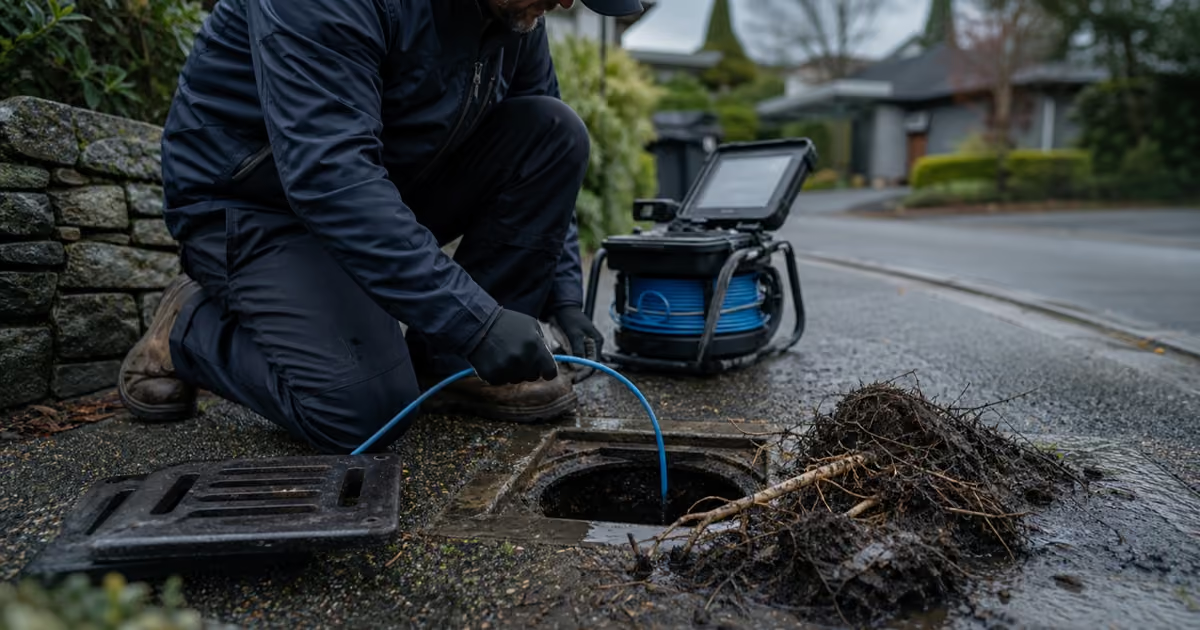
Restored flow is the first objective in an urgent situation. A thorough clean and a follow-up CCTV drain inspection answer the separate question of whether the pipe is actually clear and undamaged.
What commonly causes repeat blockages?
The most common causes are material left inside the line, tree-root intrusion, damaged or misaligned pipework, poor fall, unsuitable material continuing to enter the drain, or a system being overloaded. The pattern of the recurrence helps narrow that list.
Tree roots are growing through a joint or crack
Cutting roots opens the pipe, but the entry point remains unless it is repaired. Fine regrowth can begin catching material again. The cleaned line should be inspected to locate the opening and establish whether monitoring or repair is appropriate.
A displaced joint keeps catching material
When one pipe section sits out of alignment with the next, it creates an internal edge. Paper and solids can snag on that edge even after the original blockage has been removed.
The pipe has a low point or inadequate fall
Gravity drains rely on a consistent slope. A sagging section can retain water and solids instead of carrying them onward. CCTV may show standing water, although level or survey information can be needed to assess the fall accurately.
The line is cracked, deformed or partly collapsed
A structural restriction reduces the available opening and changes the flow path. Repeated clearing may provide temporary relief but cannot restore the shape of a damaged pipe.
Fats, wipes or other unsuitable material keep entering
Cooking fats cool and adhere inside wastewater pipes. Wipes do not break down like toilet paper. If the same material continues entering the system, a cleaned drain can develop another blockage without any structural defect.
Watercare's household guidance is straightforward: only toilet paper and human waste should be flushed, and fats, oils and grease should not be poured down sinks.
Sediment is entering a stormwater line
Stormwater drains can repeatedly collect silt, leaves, bark and grit from driveways, gardens and exposed soil. If the source remains, the system may refill after cleaning—especially around catchpits and channel drains.
The wrong section was treated
Drainage systems contain branches, junctions and separate stormwater and wastewater lines. A symptom may appear at one fixture while the restriction sits further downstream or on a shared section. Understanding the route matters.
The system is being overwhelmed rather than blocked
A stormwater line may work in light rain but surcharge during intense rainfall. The cause may relate to inlet capacity, downstream conditions, a saturated soakage system or additional runoff reaching the line. That is different from a solid blockage.
What clues help distinguish the cause?
The timing, weather, affected fixtures, material recovered and repeated location all help distinguish an accumulation problem from a structural defect or a capacity issue.
- The interval: a problem returning within days may suggest incomplete clearance or a severe restriction; gradual return may point to accumulating material or roots.
- The affected fixtures: several fixtures changing together usually points to a shared downstream line.
- The weather: symptoms only during rain suggest a stormwater issue or rain entering wastewater drainage.
- What was removed: roots, wipes, grease, gravel and broken pipe fragments each point toward different follow-up checks.
- The location: repeated trouble at the same measured point makes an underlying defect more likely.
What should happen after a recurring blockage?
After safe flow has been restored, the relevant section should be cleaned and inspected so the cause—not only the symptom—can be recorded and addressed appropriately.
- Record the pattern. Note affected fixtures, weather, timing and how long the previous clearance lasted.
- Restore safe flow. The immediate obstruction still needs to be dealt with appropriately.
- Clean enough to inspect. A camera cannot assess a surface hidden by dirty water or attached material.
- Inspect the line. Look for the restriction, the condition immediately around it and any standing water or open joints.
- Locate important findings. Knowing the position from the surface supports a practical recommendation.
- Match the response to the cause. Maintenance, behaviour changes, monitoring and repair solve different problems.
Does every repeat blockage mean the pipe needs replacing?
No. Some recurring blockages result from material entering an otherwise serviceable pipe. Others come from a local defect rather than failure of the entire line. The decision should follow cleaning and inspection, not be based on recurrence alone.
Conversely, repeatedly clearing a known structural restriction without reviewing the pipe condition can leave the underlying cause unresolved. The footage and site evidence should drive the next step.
What can property occupants do?
Occupants can reduce avoidable material entering the system and preserve useful evidence for diagnosis, but they should not open or enter unfamiliar drainage structures.
- Keep wipes, sanitary items and other products out of toilets
- Keep fats, oils and food scraps out of sinks
- Prevent leaves and loose sediment from covering stormwater inlets
- Do not open heavy or unfamiliar drainage covers
- Keep previous footage, reports and blockage locations
- Seek prompt help if wastewater is overflowing or water is threatening the building
When is the problem urgent?
Stop using affected fixtures and seek assistance when wastewater is backing up, several drains stop together, an overflow is reaching living areas, or the ground is sinking around a pipe route. Keep people away from contaminated water and unstable ground.
Frequently asked questions
Why did the drain work normally immediately after clearing?
Even a partially opened path can drain well at first. The restriction becomes noticeable again when new material catches, roots regrow or flow increases.
Will a camera always find the cause?
It can identify many visible causes, but it cannot see through the pipe wall or past every complete obstruction. The result must be considered with symptoms, drainage layout and any material recovered.
Is regular cleaning the answer?
Planned cleaning is appropriate for systems that predictably accumulate material. It is not a substitute for assessing a crack, collapse, displaced joint or other structural restriction.
Related information and sources
Hydro Vision describes the difference between clearing, CCTV verification and follow-up advice on its drain-unblocking page and drain-maintenance page. Watercare's blockage and overflow guidance explains what should and should not enter Auckland's wastewater network.
Reviewed by the Hydro Vision drainage team. Last reviewed 14 July 2026.