What Can a Drain Camera Actually See Inside a Pipe?

Short answer: a drain camera shows the visible condition of the inside of a pipe. It can reveal roots, cracks, displaced joints, accumulated material, foreign objects, standing water and collapsed sections. It cannot see through the pipe wall or always explain a problem from the image alone, so the footage needs to be interpreted alongside the pipe layout, symptoms and flow behaviour.
How does a CCTV drain inspection work?
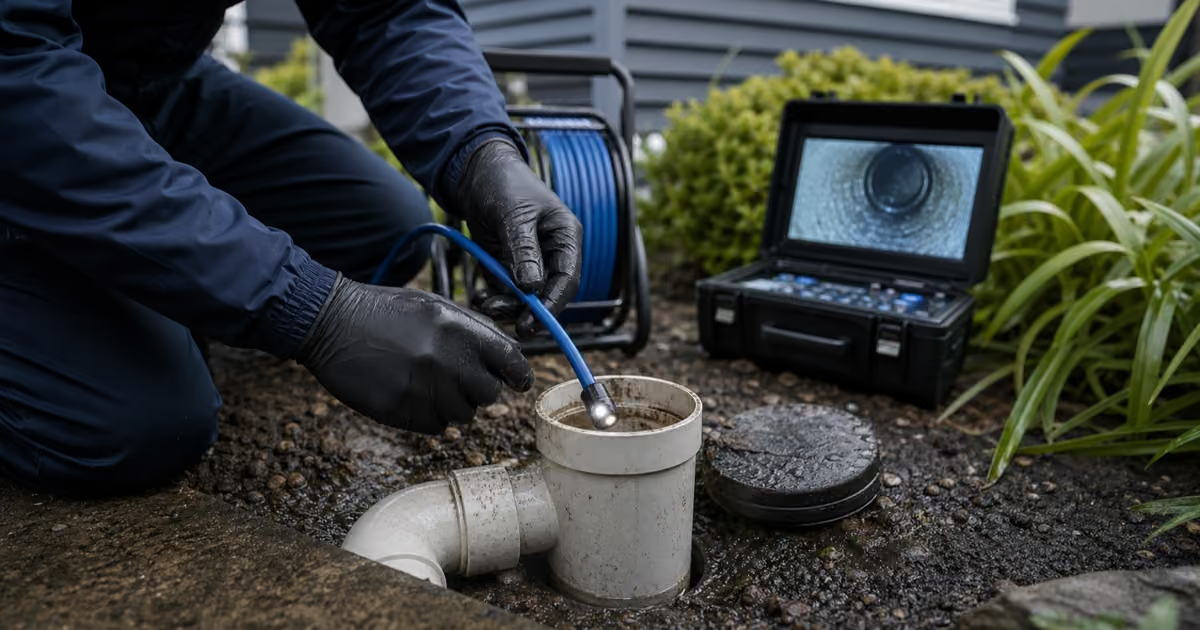
A compact waterproof camera is guided through an accessible opening in the drainage system. As it travels, the technician watches a live image and records the condition of the pipe. A locator can also help establish where the camera head is positioned from the surface.
The inspection is visual. It establishes whether the pipe is open, where a restriction begins, whether visible damage is present, whether water is sitting where it should be flowing, and whether the condition changes at a joint, bend or connection.
What problems can a drain camera identify?
A drain camera can identify visible restrictions and defects inside the line, including root growth, cracks, open or displaced joints, deformation, collapsed sections, accumulated material, foreign objects and standing water.
Tree-root intrusion
Fine roots often appear as hair-like strands entering at a joint or crack. More established growth can form a dense mass that catches debris and restricts flow. Footage helps show both the amount of growth and the point where it is entering.
Cracks, holes and broken sections
A camera can show visible fractures, missing pipe material and deformation. The seriousness depends on the pipe material, the location and whether the defect is affecting flow or allowing soil and roots to enter.
Displaced or open joints
Older pipes are commonly installed in sections. Ground movement can leave one section sitting out of alignment with the next. On camera, this may look like a step, gap or exposed edge that catches paper and other material.
Collapsed or restricted pipework
A severe deformation or collapse may reduce the opening or stop the camera completely. If the camera cannot pass, the recording still helps locate the obstruction and show the condition immediately before it.
Built-up material and foreign objects
Grease, scale, sediment, wipes and other material can adhere to the pipe or form a blockage. A camera can show what remains after flow has been restored and whether further cleaning is needed.
Standing water and changes in pipe level
Water sitting in a gravity drain can indicate a low point, poor fall, deformation or a restriction further downstream. The image alone does not calculate the pipe gradient, but it provides an important clue that can be checked against the rest of the inspection.
Connections, bends and changes in pipe material
Inspection footage also helps map how a line is arranged. It can show junctions, direction changes and transitions between different pipe materials, which is useful when plans are incomplete or the drainage has been altered over time.
What can a drain camera not show?
A camera is powerful, but it is not an X-ray. It cannot directly show:
- The condition of soil surrounding the pipe
- Water travelling outside the pipe wall
- The full depth or width of a crack hidden from the lens
- A section beyond a blockage the camera cannot pass
- The cause of every odour or intermittent drainage problem
Dirty water, condensation or heavy deposits can also obscure the lens. In some cases, the line must be cleaned before a useful condition assessment can be completed.
Why does interpretation matter?
Two defects can look similar on screen but have different implications. A technician considers the location, pipe material, direction of flow, recurring symptoms and whether the defect is actively catching material. The aim is not simply to find something unusual; it is to explain whether the finding relates to the problem being investigated.
For example, roots at one joint may be the main cause of a recurring blockage. In another line, a small amount of root growth may be secondary to a displaced section further downstream. The inspection needs to be read as a sequence rather than as a collection of isolated images.
What should a useful inspection report include?
A clear result should identify the section inspected, important observations and where they occur. Depending on the purpose of the inspection, it may include recorded footage, still images, location information and practical recommendations.
The most useful conclusion records three things:
- The visible condition inside the pipe
- Whether the finding is affecting flow or is likely to cause another problem
- The appropriate next step: monitoring, cleaning, further investigation or repair
When is a CCTV drain inspection helpful?
CCTV is most helpful when the cause or location of a drainage problem is uncertain, when a blockage keeps returning, or when the condition of an older or hidden pipe needs to be documented.
- A blockage returns after the drain has been cleared
- Several fixtures are draining slowly or gurgling
- Roots or broken pipe material have been removed
- There is unexplained pooling, leakage or ground movement
- A property purchase needs a clearer view of underground drainage
- The route or condition of an older drain is uncertain
Frequently asked questions
Can a drain camera find an exact blockage location?
It can usually identify where the camera reaches the obstruction. A compatible surface locator can then help establish the camera head's position above ground.
Does the drain need to be unblocked before the camera goes in?
Not always. The camera may be used during diagnosis, but a line filled with dirty water or solid material may need professional drain unblocking in Auckland and cleaning before the pipe condition can be assessed properly.
Can CCTV prove that a pipe is leaking?
It can show defects that may allow leakage, such as cracks, holes or open joints. Because it cannot see outside the pipe, other evidence may be needed to confirm where escaping water is travelling.
Is a camera inspection the same as cleaning the drain?
No. CCTV records and assesses the internal condition. Cleaning removes material. The two processes are often used together because cleaning improves visibility and a follow-up inspection confirms the result.
Related Hydro Vision information
Hydro Vision explains its inspection process, reporting and applications on the CCTV drain inspection service page. The purpose of that page is service information; this article is intended as a detailed reference for understanding what the camera footage can and cannot tell you.
Reviewed by the Hydro Vision drainage team. Last reviewed 14 July 2026.