How Do Tree Roots Get Into Drains, and What Happens Next?

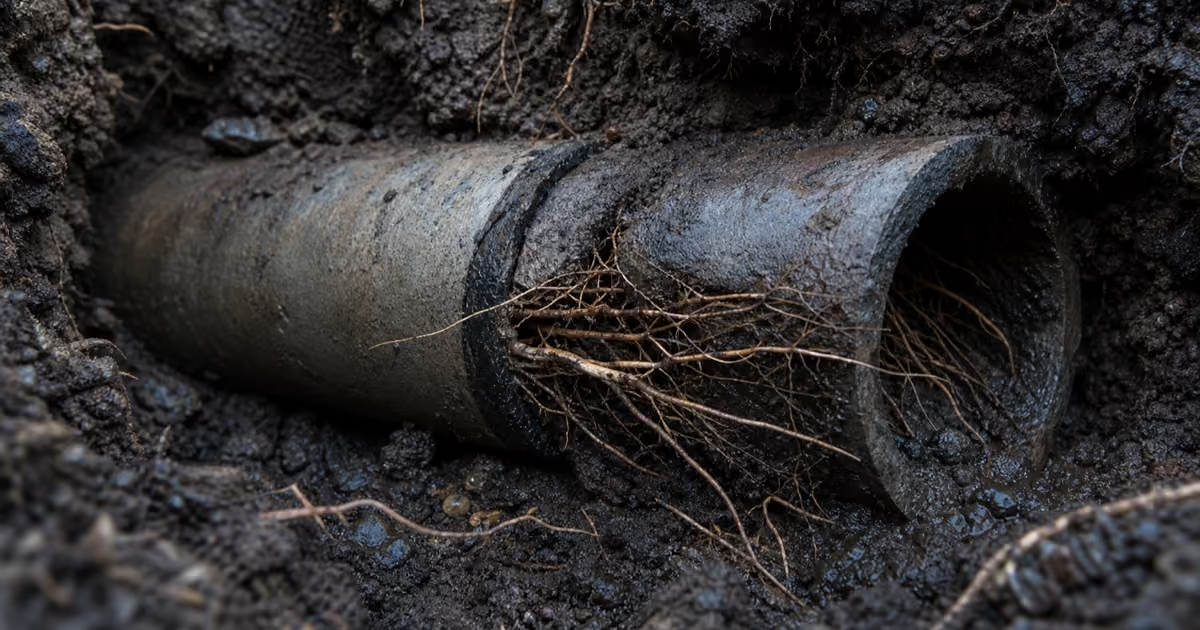
Short answer: tree roots usually enter a drain through an existing opening such as a cracked pipe, an imperfect joint or a damaged connection. Fine roots follow moisture and nutrients, then grow inside the line. The roots catch passing material, restrict flow and can contribute to repeated blockages. Removing them restores space, but the entry point still needs to be understood.
Do roots break straight through a sound drain pipe?
Roots generally take advantage of a weakness rather than piercing an intact modern pipe wall. Older sectional pipes have many joints, and movement can create small gaps over time. Cracks, displaced connections and damaged inspection points can provide the same opportunity.
Even a narrow opening may be enough for fine feeder roots. Once inside, they have access to a consistent source of moisture. The visible mass can become much larger than the original gap.
Why are underground drains attractive to roots?
Roots grow through soil in response to water, oxygen and suitable growing conditions. A leaking or imperfect drain can create a damp zone around a joint. Fine roots can enter that zone and follow it toward the opening.
The location of the tree canopy does not show the full reach of its root system. Watercare advises property owners that roots can extend beyond the adult branch spread, which is one reason drainage problems may involve a tree that is not immediately beside the pipe.
What happens after roots enter the pipe?
Once inside, fine roots spread through the available space, catch passing material and gradually restrict the flow. The result can progress from a minor snag point to a dense obstruction that repeatedly blocks the line.
Fine roots form a screen
The first growth may look like thin hairs across part of the opening. Paper, wipes, grease and other material can catch on this screen rather than travelling freely downstream.
The restriction grows
More roots and trapped material reduce the available space. Flow becomes slower and the pipe may begin to hold water upstream of the affected joint.
Blockages start to recur
A drain may be cleared and work normally for a period, then block again at the same place. If the opening remains and the root system is active, regrowth can repeat the cycle.
The pipe defect may change
Root growth and surrounding ground movement can place further stress on an already damaged joint. The seriousness depends on the pipe material, the original defect and the site conditions; visible roots do not by themselves prove that a whole line has collapsed.
What signs suggest roots may be involved?
Root intrusion often produces a gradual or recurring pattern rather than a single isolated blockage. The following clues make roots worth investigating, although a CCTV drain inspection is needed to distinguish them from other causes.
- A blockage returns at a similar interval or location
- Drainage becomes slower gradually rather than stopping once
- Several fixtures feeding the same line are affected
- Root fibres are recovered during clearing
- The property has mature trees near an older drainage route
- Gurgling or changes in water level return after temporary improvement
These signs are not exclusive to roots. A displaced joint, foreign object, poor fall or accumulated material can produce similar symptoms, which is why visual inspection is useful.
What do tree roots look like on CCTV?
New growth may appear as pale, hair-like strands entering from one edge of a joint. Established roots can look like a brush, curtain or dense woven mass. The footage should show where the roots enter, how much of the pipe they occupy and whether other defects are present nearby.
Heavy growth can prevent the camera from passing. In that case, the line may need to be cleared before the pipe behind the root mass can be inspected. A post-cleaning camera run is important because the original blockage can hide the joint or crack beneath it.
Does cutting the roots solve the problem permanently?
Root removal addresses the immediate restriction. It does not automatically close the opening that allowed entry. The appropriate next step depends on what the cleaned pipe shows.
Possible outcomes include:
- Monitoring a minor entry point and reinspecting at an appropriate interval
- Planned root management where regrowth is expected
- Repairing a localised damaged joint or connection
- Further assessment where deformation, collapse or ground movement is visible
A clear recording helps separate a maintenance problem from a structural one. That distinction should be made after cleaning, when the pipe surface and entry point can be seen.
Can chemicals stop tree roots in drains?
Products promoted as root treatments do not repair a crack, gap or displaced joint. They may also be unsuitable for the drainage system or receiving environment. Avoid adding an unknown chemical to a wastewater or stormwater line without checking that it is authorised and appropriate for that system.
Should the nearby tree be removed?
Not automatically. Removing a tree is a separate arboricultural decision and does not repair the pipe. The first task is to locate the root entry and understand the pipe condition. If the tree itself requires assessment, use a suitably qualified arborist and consider any council protections before work begins.
How can root-related blockages be reduced?
The most reliable approach is to identify the entry point, clear enough growth to inspect the pipe, and then follow an appropriate monitoring, maintenance or repair plan based on the condition found.
- Keep records of where and when the drain has blocked
- Use CCTV after significant root removal to expose the entry point
- Follow the monitoring or repair recommendation from the inspection
- Do not plant large trees directly over known private drains
- Have older drainage checked when recurring symptoms begin
Frequently asked questions
Can roots enter PVC drains?
They can enter if a joint, connection or section is damaged or open. The pipe material matters less than whether there is a pathway into the line.
How quickly do drain roots grow back?
There is no universal interval. Growth depends on the tree, season, moisture, size of the opening and how completely the line was cleared. Inspection findings are more useful than a fixed timetable.
Can a camera identify which tree the roots came from?
No. CCTV shows the entry point inside the pipe, not the full root path through surrounding soil. Tree identification may require separate site and arboricultural assessment.
Related information and sources
See Hydro Vision's explanation of CCTV drain inspection and its drain-unblocking process. Watercare also lists tree roots among the causes of Auckland wastewater blockages in its wastewater frequently asked questions.
Reviewed by the Hydro Vision drainage team. Last reviewed 14 July 2026.